Thesis · Chapter 1
Introduction
It is only a slight exaggeration to say that good physics has at times been spoiled by poor philosophy.
— Werner Heisenberg
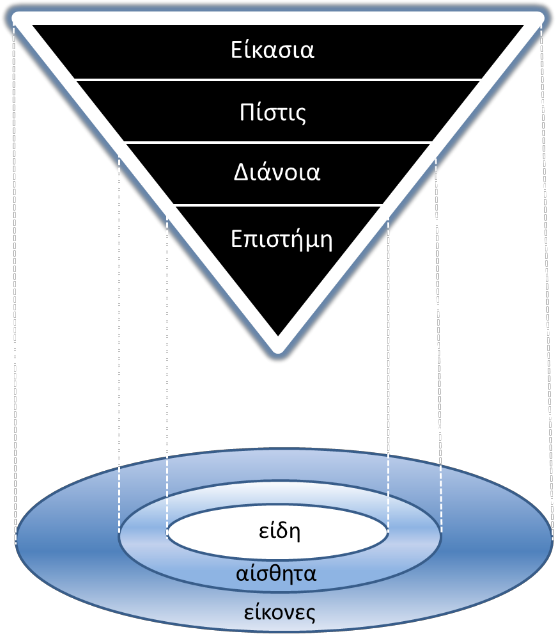
The opening chapter places the thesis inside a philosophical frame before any chemistry begins. It reads scientific knowing through Plato’s four sapiential stages — eikasia, pistis, dianoia and episteme — and likens the leap from discursive understanding (dianoia) to the sudden grasp of necessity (episteme) to a symmetry-breaking, Jahn–Teller event: truth arriving all at once, not step by step.
The doctrine of the eide — the intelligible forms that lie behind appearance, in the topos noetos — is introduced here, and with it the ambition the title announces through its pun: to re-acidify the philosophy in a Ph.D. Everything that follows, from metallaborane cages to the siroheme of an enzyme, is pursued as an ascent toward that deeper kind of knowledge.